Hello! Changzhou Kinder Decoration Material Technology Co., Ltd.!
Add to Favorites | Site Map | Official WeChat

 中文
中文
 English


How to avoid sticking of water-based pencil glue?
Author:Changzhou Kinder Decoration Material Technology Co
Click:
Time:2024-08-06 15:55:05
Glue, as an indispensable item in our daily life, provides us with great convenience with its magical bonding ability. However, have you ever wondered why glue does not stick to the container it is in? This question not only involves the basic principles of glue, but also its manifestation on different materials. This article will take you to explore the history of glue, its working principle, and why glue does not stick to its container.
Historical background of glue
The use of glue in ancient times
The history of glue dates back thousands of years to ancient civilizations. As early as 5300 BC, humans had already begun to use the adhesive properties of natural substances. Archaeologists have found evidence of mixing soil and clay to bond stones in ancient sites. These early glues were mainly made from natural materials, such as resins and animal glues. In China, about 4,000 years ago, people used natural raw lacquer as an adhesive to make various utensils, while in the Zhou Dynasty 3,000 years ago, people used animal glue to glue ships. The ancient Egyptians also mastered the technology of extracting natural adhesives from plants and animals, such as gum arabic extracted from acacia trees and rosin extracted from pine trees.
The emergence and development of composition glue
With the advancement of science and technology, the formula of glue has also undergone tremendous changes. In 1909, chemist Baekeland invented phenolic resin, which marked the birth of synthetic resin glue. In the 1950s, the invention of epoxy resin glue further promoted the development of glue. Epoxy resin glue quickly became the first choice for various industrial applications due to its excellent bonding properties and wide applicability. The emergence of synthetic glue not only expanded the scope of application of glue, but also improved the performance of glue, so that it can meet various complex bonding needs.
How glue works
The role of polymer adhesives
How glue works depends largely on its chemical composition. Modern glues generally contain spherical polymer particles with a radius between 0.5 and 5 nanometers. The polymer adhesive exists in the glue as a solution, usually mixed with water or an organic solvent. When the glue is applied to the surface of an object, the polymer particles will penetrate into the tiny pores on the surface of the object as the solvent evaporates, and form a strong adhesion on the surface, thus completing the bonding. The mutual forces between these polymer particles, especially the van der Waals forces and hydrogen bonds, play an important role in the bonding process.
How different types of glue work
Different glues have different working mechanisms. For example, the core ingredient of water-based pencil glue is cyanoacrylate, which exists as a monomer in a sealed state. Once exposed to air, it will come into contact with moisture and quickly undergo a polymerization reaction to form a solid polymer. The speed of this chemical reaction is much faster than the drying speed of water-based glue, so water-based pencil glue will cure quickly when used and firmly bond objects. This rapid chemical reaction also makes water-based pencil glue almost impossible to retract when bonding, which also explains why it sometimes accidentally sticks objects that should not be bonded together.
The reason why glue does not stick to the container
Influence of container materials
The reason why glue does not stick to the container it is mainly related to the material of the container. Common containers for glue are plastic bottles (polyethylene, polypropylene) or glass. These materials have low surface energy and are not easy to form effective adhesion with glue molecules. The surface molecular structure of plastic and glass makes it impossible for glue to form strong enough adhesion on these surfaces, so the glue will not stick to the container. For example, the molecular chains of plastics such as polyethylene (PE) and polypropylene (PP) are relatively regular and non-polar, which makes them less interactive with glue.
Glue planning and manufacturing principles
When designing glue, manufacturers will deliberately adjust its viscosity and fluidity to ensure that the glue remains liquid at room temperature and pressure. This design not only facilitates the use of glue, but also prevents the glue from curing in the container. For example, water-based pencil glue will only polymerize after contact with air and moisture. Therefore, in a sealed bottle, the glue will not stick to the container due to the lack of conditions required for polymerization. This design ensures that the glue will not cure prematurely during storage, thereby extending its service life.
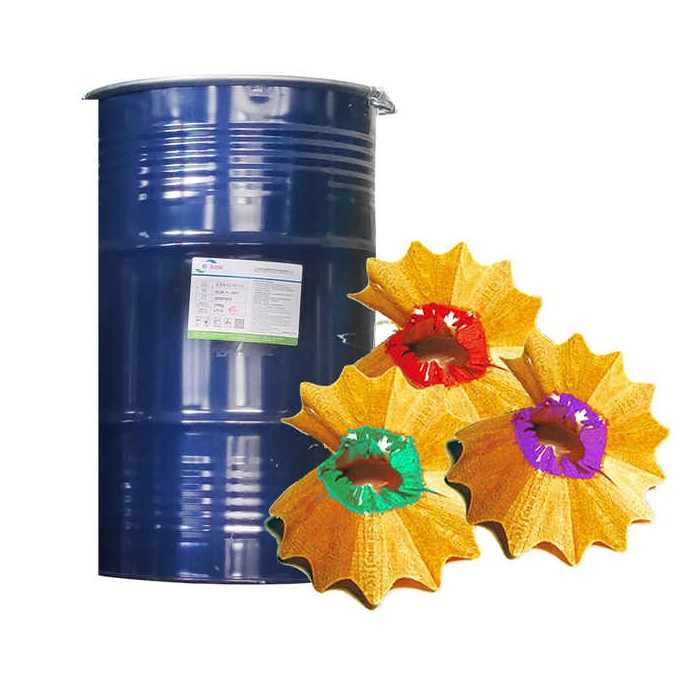
How to avoid water-based pencil glue
Common exemption methods
Water-based pencil glue is often used for emergency repairs and crafts because of its fast curing and strong adhesion. However, when water-based pencil glue is accidentally stuck on the skin or other objects, it becomes a tricky problem to remove it. Acetone is one of the most commonly used solvents, which can effectively dissolve water-based pencil glue. You can use nail polish remover containing acetone, or a special acetone glue dissolving agent, apply a small amount of acetone to the glued area, and gently rub it until the glue dissolves. Acetone can break the polymer structure of the glue, making it easy to remove.
Precautions and safety tips
When using acetone, be careful that it may irritate the skin and certain materials. Therefore, when using acetone, avoid long-term contact with the skin and ensure that the operation is in a well-ventilated environment. If water-based pencil glue is accidentally stuck on the skin, it should be washed immediately with warm water and soap, and try to avoid using strong irritating solvents. For sensitive areas or large areas of glue adhesion, it is recommended to consult a doctor or professional for advice to ensure safe and effective removal of adhesion.
